You are watching the Gerbera Flowers Wallpapers in the category of Flowers Wallpapers collection. You can download these Images to set as Desktop Background.
You are watching the Sunflowers Wallpapers in the category of Flowers Wallpapers collection. You can download these Images to set as Desktop Background.
Jacaranda is a genus of 49 species of flowering plants in the family Bignoniaceae, native to tropical and subtropical regions of Central America, South America (especially Argentina), Cuba, Hispaniola and the Bahamas. It has been planted widely in Asia, especially in Nepal. It is found throughout the Americas and Caribbean, and has been introduced to Australia, New Zealand, India, Fiji, Portugal, Spain and parts of Africa. The genus name is also used as the common name.
Central Park is a public park at the center of Manhattan in New York City. The park initially opened in 1857, on 778 acres of city-owned land. And This is a most beautiful picture during the spring time
Name also: Common Blue Sow Thistle, Blue Sow-thistle
Family: Daisy Family – Compositae, subfamily – Cichorioideae (formerly Chicory Family – Cichoriaceae)
Growing form: Perennial herb. Rhizome horizontal. Forms stands.
Height: 100–150 cm (40–60 in.). Stem usually unbranched, lower part glabrous, upper part with glandular hairs.
Flower: Flowers 2.5–4 cm (1–1.6 in.) wide, single flower-like capitula surrounded by involucral bracts. Capitulum’s ray-florets violet, tongue-like, 5-toothed at tip. Stamens 5. Gynoecium composed of 2 fused carpels. Involucral bracts in many rows. Capitula borne in a wide corymbose cluster.
Fruit: Narrowly elliptic achene, crowned by a pappus of unbranched hairs.
Habitat: Roadsides, ditches, parks, gardens. Ornamental, sometimes left over from old gardens or an escape.
Flowering time: July.
Blue sowthistle is native to the Ural and Caucasus mountain ranges. In Finland it is cultivated as a perennial in gardens and old manor house parks. The plant thrives in rich loamy soil so well that it needs no additional help from humans – in fact in the flower bed it is more advisable to limit its growth. As a large plant it leaves its neighbours in the shade and often spreads to form dense stands, and sometimes it escapes into the wild and spreads of its own accord.
Blue sowthistle doesn’t seem to threaten the diversity of Finland’s nature, but many other non-native plants do have the effect of threatening native plants by competing or cross-breeding with them, and even changing the qualities of their environment. Species that have spread around the world with people do not enrich our nature, but rather standardise the word’s unique communities and at worst threaten the future of Finland’s own species. Problems caused by foreign species are presently regarded as the second worst threat to natural diversity immediately behind the disappearance and change of habitats. The situation in Finland is not as bad as it is in many other parts of the world: our harsh climate, unproductive soil and ubiquitous coniferous forest don’t suit very many species. Finland’s highly fragile habitats are wetlands and broad-leaved forests, where it is wise to keep a keen eye on feral species. Their cultivation should be curbed as much as possible and if they are desired in the flower garden care should be taken that they don’t escape.
Make a small garden to the patio or balcony can be done very easily, even can work in the smallest space. Patio is a very important and serves to bring a comfortable atmosphere in house. While the balcony is very necessary for you who live in a tiny apartment. Enjoy the time to read a book, relax or even breakfast would be more fun by adding a garden design. This time we present some fresh ideas to decorate a patio or balcony of your home and provide different colors for your home. The dominance of green color can give the impression of fresh, garden design that will surely make you feel at home to linger in this place.
Shades of garden thick with green impression more interesting by adding some furniture in it. As accessories, potted plants, pillows, baskets, flower gardens and favorite. Adding some small garden ideas to decorate your home garden and patio that would make it more perfect.
Hopefully this time garden design can inspire you in creating the home space you crave. As a complement garden decoration this time, you can also add some great furniture to create a modern impression. But those that include classic style fans can choose furniture with accents of soft natural look.
Alliums are a genus of bulbus plants containing over 280 species, many of which are found wild all over the Northern Hemisphere. Allium giganteum is native to the Himalayas and given the right conditions can grow to a height of over 4 ft! The leaves are glaucous and broadly strapped shaped, and they produce these beautiful, deep lilac, star-shaped flowers on impressive 4-5 inch umbels in June.
The giant allium will do best in well drained soil, and prefers a site blessed with full sun. If you are purchasing Allium giganteum as bulbs in the autumn then these can be planted September to October. Just make sure that they are planted a good 3-4 times the depth of the bulb - otherwise the plant may not be able to support the height of the stem and will fall over in strong winds. In exposed sites you may need to consider staking!
Dead-head after flowering, leaving the stem to die back naturally so that the nutrients and carbohydrates within can bulk-up and strengthen the bulb for the following year. Allowing the seeds to ripen will use precious energy, unless you are collecting the seed for propagation.
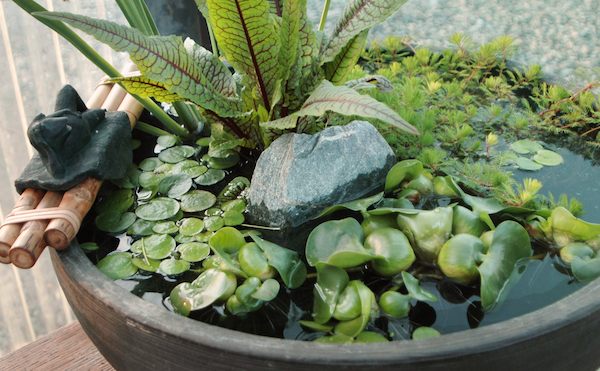
All you add is water. That's pretty much what it takes to become a successful container water gardener. Incredibly, small pots filled with water plants take care of themselves most of the time, as long as you keep adding fresh water. The plants, still in individual pots, derive most of their nutrients from the garden soil they're planted in. Can you think of a more ideal way to garden?
In truth, you do have to do a few things from time to time in addition to adding water — keep on the lookout for algae, prevent mosquitoes from using the little garden as a trysting place and scrub out the pot. But when you think of it — there's no ground to till, no weeds to fight, no need to add mulch and compost. Sounds good to me.
Water in a garden of any size creates an oasis not only for you but also for birds, butterflies, dragonflies and even small fish. Pond pots, sometimes referred to as "still pots," nestle nicely in small spaces such as balconies or decks but they can also be tucked into nooks and crannies in spacious gardens. All that's needed is a small non-draining, non-porous pot and a few water plants. A pond in a pot can be a terrific first gardening effort for children.
Selecting the Perfect Pond Pot It's no surprise that you'll need a pot that holds water. Many pond pots are made of ceramic, plastic, sealed cement, porcelain or metal. Old crocks and wash tubs, plastic pots also make excellent pond pots. Be creative when selecting a pot. Even an old-fashioned clawfoot tub can be adapted for a big pond-in-a-pot. Avoid using wood containers, such as wine and whiskey barrels, as they may contain bacteria that are harmful to plants and fish. If a wood container is just what you've been dreaming of, line it with a heavy-gauge plastic bag or a pre-formed plastic liner. The size of your pond pot depends upon the size of your space and the number of plants to be inserted into the pot. Four to five plants fill a pot that is about 16 inches in diameter and about 12 inches deep. However, even one small water plant in a corresponding decorative pot can invite harmony. Art and Science of Water Gardens: Plant Habits and Varieties Pond pots are created by utilizing the various types of water plants- floating leaf aquatics, oxygenating grasses, bog and marginal water plant species. They all thrive in water but have different growing habits and water depth requirements. Floaters. Floating plants such as water hyacinth and water lettuce help reduce algae in the water garden. Water hyacinths reproduce rapidly; you may need to cull some of the plants from time to time. If you live in a warm climate, don't throw water hyacinths into open water such as canals, ponds, etc.; it's an invasive plant. Oxygenating grasses. Most oxygenating grasses grow submerged deeply in water and either sit at the bottom of the pot or float on the water's surface. Oxygenating grasses help maintain the proper pH balance of the pond pot's water. Examples: anacharis (Egeria densa), fanwort (Cabomba caroliniana), feather grass and blood grass. Bog plants. Water in the pond pot should just cover a bog plant's soil. That's because bog plants grow naturally in shallow water at a pond's perimeter. In a pond pot it may be necessary to set bog plants on top of rocks or small inverted pots to create a more shallow water environment. Marginals. Marginal water plants grow 1 to 12 inches underwater in the margins of ponds, between the shore and deeper water. Marginal plants are favorites in small pond pots and usually sit at the bottom of the pot. Examples: horsetail and yellow iris (Iris pseudacorus). Deep-water plants. Some plants like water lilies need deep water — at least one foot of a water above their roots, and they need a few square feet in which to spread their foliage. To grow one of these well, you'll want an extra large container such as a bathtub or a whiskey barrel. Water lilies help cool the water and reduce algae growth.
Location and Selection of Plants When selecting water plants for your pond pot, consider the lighting conditions where the pond pot will reside. Morning sun or protected, partially sunny spots are optimal locations. This mild environment protects water plants from the intense heat of afternoon sun that can burn and harm the plants (and certainly threaten any fish). Tall horsetail rush, umbrella palm and floating water hyacinth are perfect partners for a partially sunny location. The most visually pleasing pond pots are created by mixing both horizontal and vertical growing plants. Short and tall varieties simply make the display more interesting. Try not to overstuff your pond-in-a-pot. A bit of empty water space keeps the arrangement from appearing over-crowded, and the simplicity of just a few plants lends itself to a peaceful pot, the idea behind water gardening.
Pond Pot Maintenance Amazingly and wonderfully, a pond in a pot requires a minimum of maintenance, except, of course, for keeping it filled with water. In colder climates, you'll need to bring the pot indoors for overwintering. Depending on weather conditions and whether it's in sun or shade, a container water garden may need as much as twice-daily topping off. Use fertilizer sparingly; water plants get many of the nutrients they need from the pond water and the soil they are growing in. Water garden fertilizer is in tablet form and the tablet can be tucked into the bottom of a water plant's soil. If fish are part of your pond in a pot, make sure to go especially easy on fertilizer, as it can be harmful or even deadly to them. The fertilizer packaging gives instructions as to quantity. There are a few chores in maintaining a healthy pond pot, but none of them will keep you busy. Algae could be your chief problem, but it needs light and nutrients to thrive, so keep some floaters on the surface to cut down on light, carefully limit the amount and type of fertilize you use, and include some submerged plants, which compete well with algae. Every once in a while drain the pond pot. You'll know it's time when two inches of decomposed matter accumulates on the bottom of the pond pot. At this time also scrub the inside surfaces of the water pot with a stiff brush. At this time, divide the plants if necessary. If the need to divide does arise, use clay garden soil for repotting or purchase water-plant soil. This special, mud-like soil may be hard to find so plan ahead; your garden center may need to special-order it. The wonderful bonus of dividing is that now you have free plants in which to create another dazzling pond in a pot. Some gardeners worry about mosquitoes when considering pond pots. You don't have to deprive yourself of a water garden; there are ways to conquer the little beasts. You can purchase the little "doughnuts" of Bacillus thuringiensis. Mosquito Dunks (available at garden centers) simply float in the pot. They are safe to use around children, birds, fish, dogs, cats and other wildlife. One doughnut is suggested for every 1/100 square foot of water, much larger than most pond pots. Feel free to halve or quarter the mosquito doughnut. For best protection, however, install a bubbler to keep the water in motion.
Fish and Fountains Pond pots are susceptible to extremes in temperature and organic changes and so are pond pot fish. Allow the container water garden to stabilize for a couple of weeks before adding any fish. When you do add the fish to the pond pot, give them a break; allow them to acclimate to the water temperature slowly — float the fish in the baggie provided by the pet store. Set the baggie on top of the water for about 15 minutes (make sure the water garden is shaded during this period); then release them. A 16-inch-diameter pot can only accommodate a couple very small fish. A general rule of thumb is to allow only one to two inches of fish length for every square foot of water surface. In the beginning feed the fish every few days with flake or granular fish food. Eventually they will feed on the pond's algae. However, if you want the fish to grow larger, feed them fish food pellets. Small gold and mosquito fish are recommended in pond pots. Gambusia, a type of fish, actually eat mosquito larvae. It takes about two months for the water to become balanced in a pond pot. The amount of chlorine in tap water should control the algae growth, but a de-chlorinator or algae blocker (available at pet stores or water garden nurseries) will help the fish survive and slow algae growth. If algae becomes a problem, empty the water out of the pond pot and scrub the individual water plant pots and the interior of the larger pond pot. When the pond pot is reassembled, use an algae blocker and follow the quantity directions on the bottle. Oxygenating grasses also improve the water's pH balance.
Jill Slater is a garden writer and floral designer who appears regularly on Henry's Garden (KRON-TV, San Francisco).